
Your Rooftop AC quites at 100. You live where it hits 120+
Arizona RV life means desert camping, summer storage, and full-time living in extreme heat. Your factor rooftop unit wasn't built for this. A ductless mini split keeps your rig cold when your rooftop AC waves the white flag - and uses half the power doing it.
Starting at $2,495 fully installed
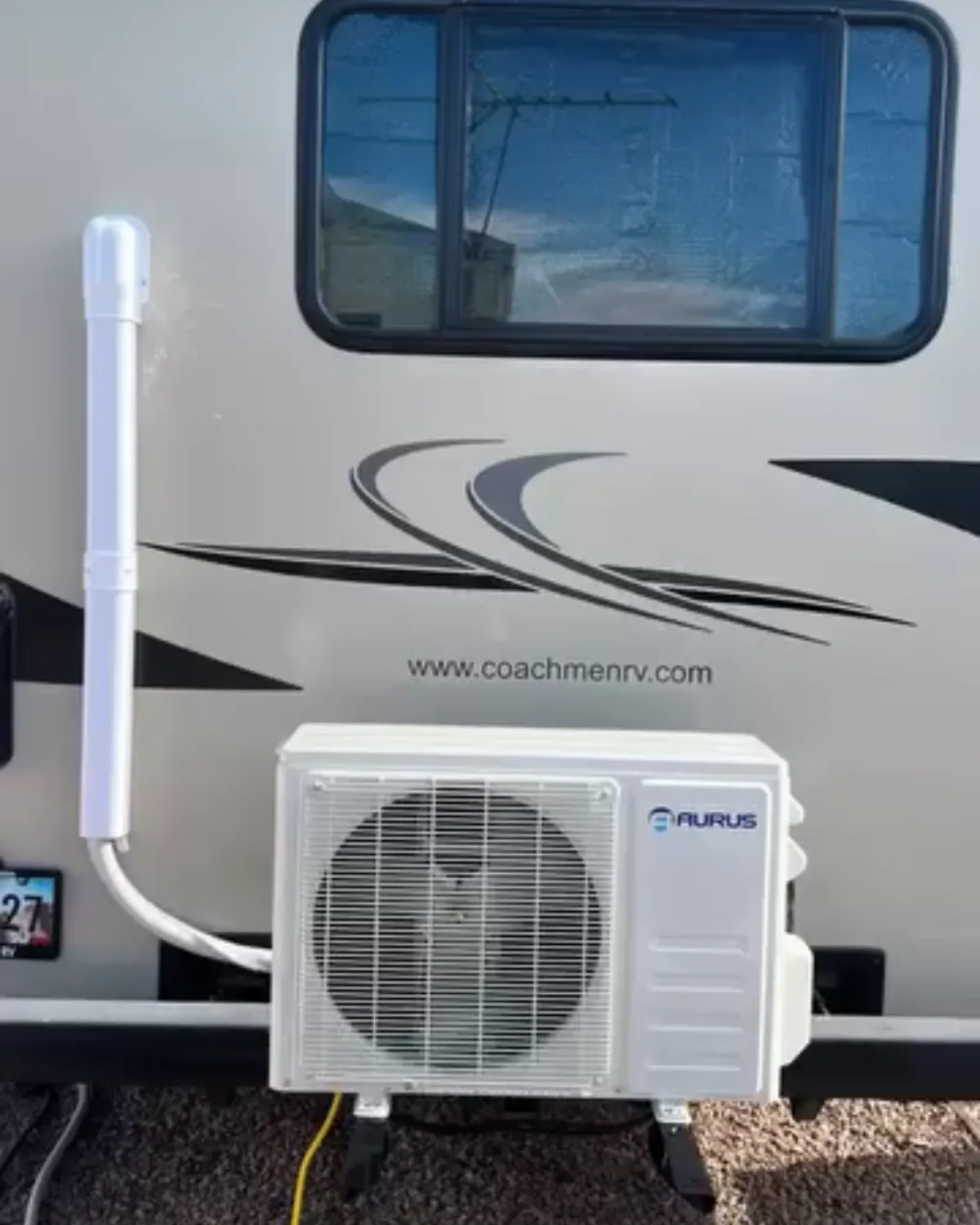
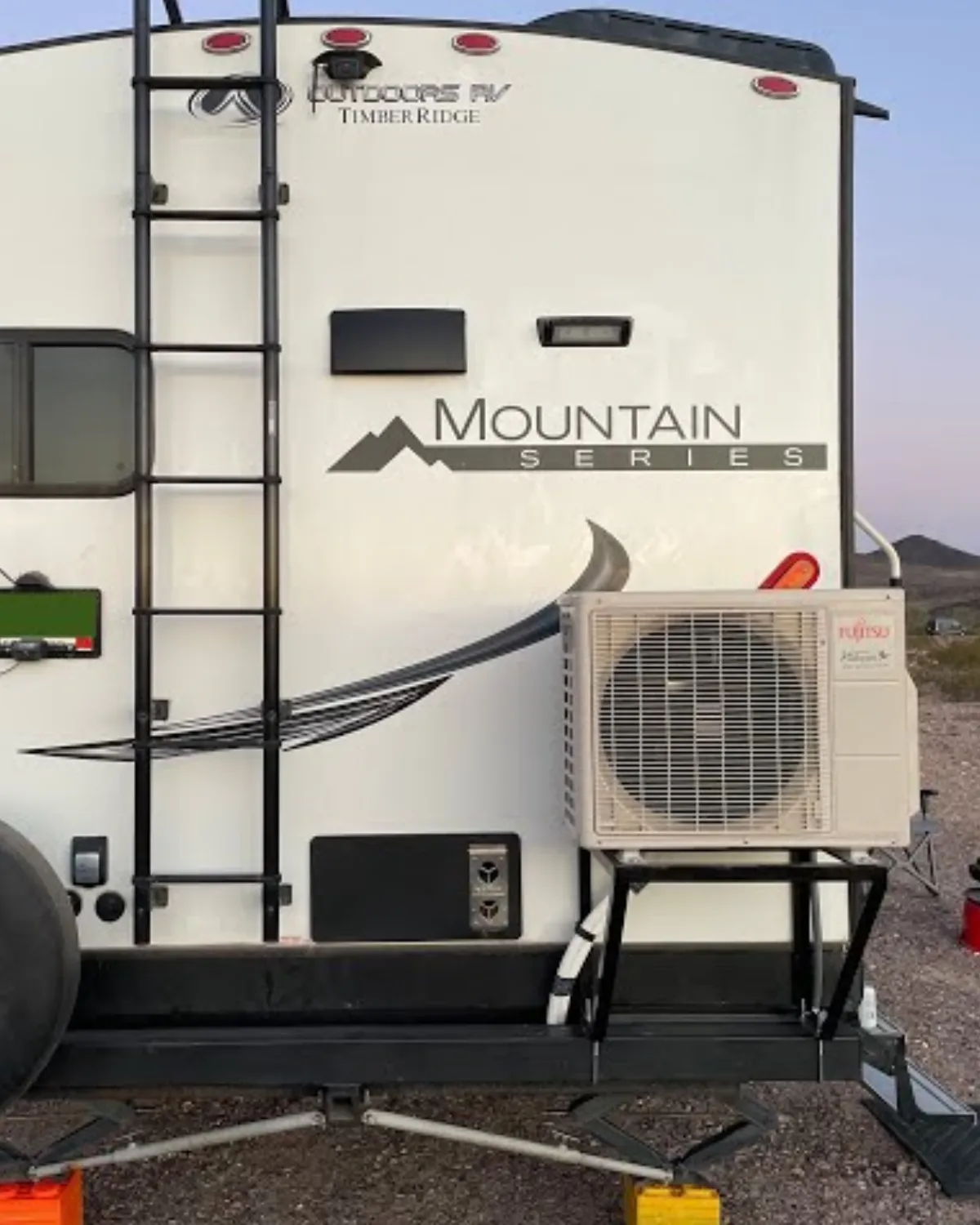
Your rooftop AC was fine in San Diego. Its not fine in Phoenix
Factory rooftop units are designed for moderate climates - 85, maybe 95 on a hot day, In Arizona, you're asking a unit rated for a mild summer to survive 120+ for months on end. Its not a matter of if it fails. It's when.
Why a Mini Split?

Rooftop ACs tap out at 100.
Most RV rooftop units lose effectiveness once ambient temps pass 100°. At 115°, they're running constantly and barely holding 85° inside. You're burning propane or shore power just to stay uncomfortable. At 120°, they cycle off on high-pressure safety — and you're sitting in a hot box.

Rooftop units are energy hogs
A standard 13,500 BTU rooftop AC pulls 12-16 amps on a 30-amp system — that's over half your available power on a single appliance. Running two rooftop units on a 30-amp hookup? Not happening. And forget dry camping with a generator — you'll burn 3-4 gallons of fuel a day just to stay cool.

Loud, leaky, and living on your roof
Rooftop ACs vibrate the entire ceiling, drip condensation onto your slide-outs, and add weight to the worst possible spot on your rig. Every roof penetration is a future leak. A mini split moves the heavy equipment off your roof and runs quieter than a conversation.
Why RV Owners are going with Mini Splits
Actually rated for desert heat
Mini Splits use inverter compressors to cool at 120+. Your rooftop unit was designed for a campground in Tennessee, not boon-docking outside Quartzsite in July. A mini split doesn't tap out it ramps up.
Half the Power draw
A mini split pulls 5-8 amps versus 12-16 for a rooftop unit. On a 30 amp hookup. Thats the difference between running AC plus your fridge, microwave, and chargers - or running AC and nothing else.
Actually quiet
Rooftop AC rattle the ceiling and make conversation impossible. A mini split indoor head runs at 40-50dB. quieter than a refrigerator.
Weight off the roof
A rooftop AC weighs 80-100 lbs in the worst possible spot - high center of gravity, over your roof membrane.
Get your RV cooling quote
Tell us about your rig and how you use it. We'll text you a straight answer on what setup makes sense and what it'll cost — no pressure, no upsell to stuff you don't need.
- Response within 15 minutes during business hours
- Good / Better / Best pricing options
- No high-pressure sales tactics
- Most installs completed same week
The right team for the job
Locally Owned
West Valley, Phoenix Metro we live where you live
Transparent Pricing
Good / Better / Best pricing options. No hidden fees and no upsell game
Fast Install
Most garage installs take only a few hours including electrical.
Fast Response
Text first communication. Get a reply in minutes not hours.
Certified Installers
Commercial grade units at residential prices built for the desert heat.
Our Happy Customers
Rick S.
Genuine Customer - Buckeye, Az

We full-time in a 38-foot fifth wheel and spent two summers sweating through June, July, and August in the west valley. The rooftop AC couldn't hold below 84° by noon. Elite Desert mounted a mini split to our rear bumper and now we're at 72° all day — even when it's 118° outside. Game changer."
Marcus T.
Genuine Customer - Surprise, Az
"Bought a toy hauler for the garage space but couldn't use the back half from May to October — it was 130° in the cargo area. Mini split on the wall back there turned it into a usable shop. Best mod I've done to this rig."
Steve P
Genuine Customer - Yuma, Az
"I was skeptical a wall unit could cool a RV in Phoenix heat. It was 118° last week and my garage was 74°. I'm a believer."
Frequently Asked Questions

Can you actually install a mini split on an RV?
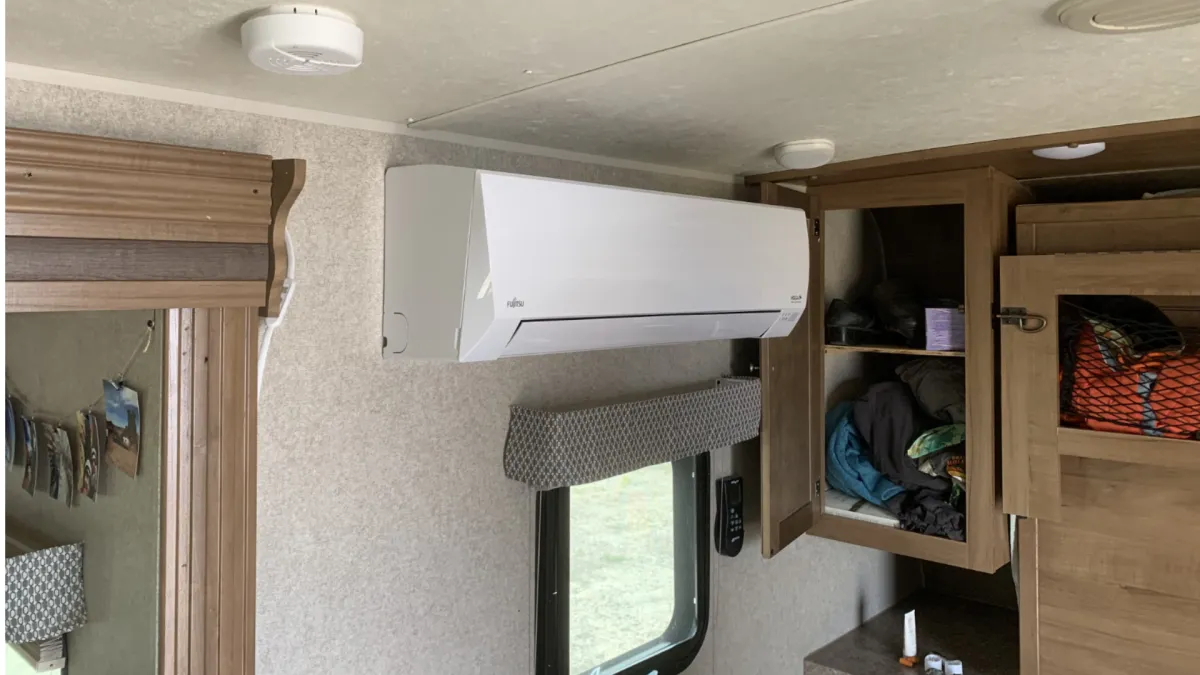
Yes. We mount the condenser to your rear bumper, frame rail, or tongue depending on your rig type, and run a line set to the indoor head mounted on the wall inside. It's a permanent install — not a portable unit you're strapping down every time you move.
Will a mini split work while I'm driving or towing?
No — the mini split runs when you're parked and connected to shore power, a generator, or your solar/battery setup. It replaces or supplements your rooftop AC at camp, not while you're on the road. Your rooftop AC still handles cooling while towing if needed.
Can I run a mini split on solar and batteries?
It depends on your battery bank and inverter setup. A mini split draws around 500-800 watts while actively cooling. With a 400+ amp-hour lithium battery bank and a properly sized inverter, many RV owners run them off solar for several hours. We'll assess your electrical setup during the quoting process and tell you what's realistic for your rig.
Will the condenser damage my bumper?
We assess the bumper's load rating before installing. Most fifth wheel and travel trailer bumpers are rated for 200-300 lbs and a mini split condenser weighs 60-80 lbs — well within range. If your bumper needs reinforcement or a different mounting location makes more sense, we'll tell you upfront. You're currently working through this exact setup on your own Montana, so we know the considerations firsthand.
What types of RVs can you install on?
Fifth wheels, travel trailers, toy haulers, Class A motorhomes, and Class C motorhomes. The condenser mounting location and line set routing changes based on the rig, but the concept is the same across all types. We'll recommend the best setup for your specific layout.
How long does an RV install take?
Most RV installs take 4-6 hours — longer than a residential garage install because the mounting, line set routing, and electrical connections require more custom work. We do it in one visit and you're camping in comfort that same evening.

©2026 Elite Desert HVAC. All Rights Reserved.